
Business Strategy & Corporate Framework
Andes Space Commercial & Scalability Architecture
Commercial Vision
Andes Space couples agile aerospace engineering with a sustainable business framework. By deployment of premium technical bootcamps alongside embedded software development, the organization addresses high-demand capacity building inside emerging markets while establishing scalable IP licensing infrastructure.
Modular Avionics Stack
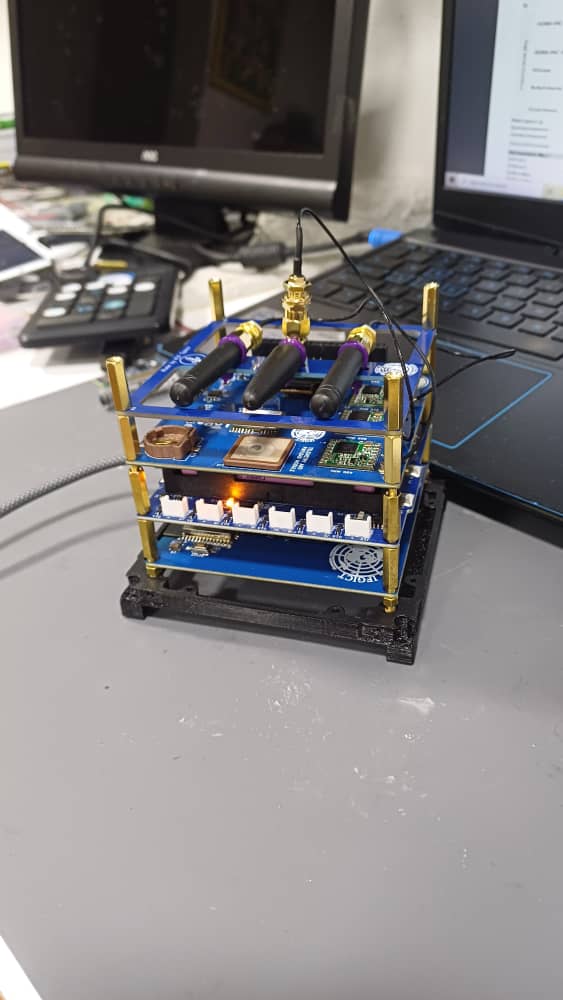
Our inner-system architecture leverages multi-layered circuit topologies and modular computing boards. This layout provides fault-tolerant data-buses and reliable Electrical Power Systems (EPS) capable of handling real-time telemetry processing within severe Low Earth Orbit (LEO) environments.
Strategic Business Model Canvas
The operational milestones achieved during our regional workshops validate a lean, cost-efficient business infrastructure engineered to maximize commercial conversion profiles.
| Canvas Pillar | Andes Space Strategic Implementation |
|---|---|
| Value Propositions | Accessible and highly tailored CubeSat software/hardware solutions, professional space-engineering certificates, and turnkey academic launch brokerage. |
| Customer Segments | Latin American academic faculties, private agricultural/IoT startups seeking low-cost geospatial fields, and regional science ministries. |
| Channels | Our centralized platform at andesspace.com, strategic in-person bootcamps, and professional aerospace engineering congresses. |
| Revenue Streams | Proprietary on-board logic and RTOS code IP licensing, specialized workshop tuition fees, and custom hardware prototyping contracts. |
| Key Activities | Continuous aerospace R&D, structural vibration analysis, and comprehensive Hardware-in-the-Loop integration testing. |
| Cost Structure | Senior engineering research incentives, laboratory component logistics, and industry-grade CAD/CAE software licensing overhead. |
Structural Flight Mechanics
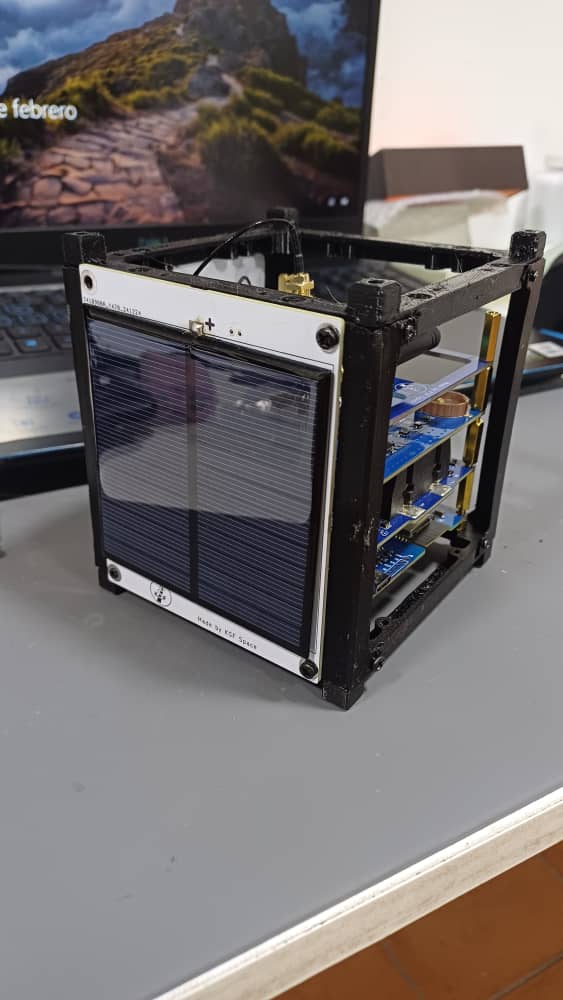
The complete 1U CubeSat model incorporates certified side-rail frames, mechanical deployment interlocks, and surface-integrated photodiode solar arrays. The structure is structurally optimized via computer-aided modeling to absorb high launch vehicle vibration dynamics.